

We know that being deep in student debt means more than simply managing monthly payments. Daniel Collier at the University of Memphis has created a fascinating website to explore how complex "more" may actually be.
Drawing on data from 1,810 survey records and 67 interviews, the site invites users to explore 15 major themes from respondents including policy uncertainties, experiences of delayed adulthood, emotional distresses, and reflections on the value of college in the end. The site includes beautifully rendered interview quotes across this broad range of themes. Short audio clips are provided for some interview segments. The immediacy of debt across so many dimensions of the lives of these people become poignantly visible.
Interactive features allow users to build their own descriptive cross tabs from survey responses, comparing 23 different outcomes across multiple respondent characteristics, from federal debt load to race and ethnicity and marital status to highest degree earned.
The Outcomes that can be explored:
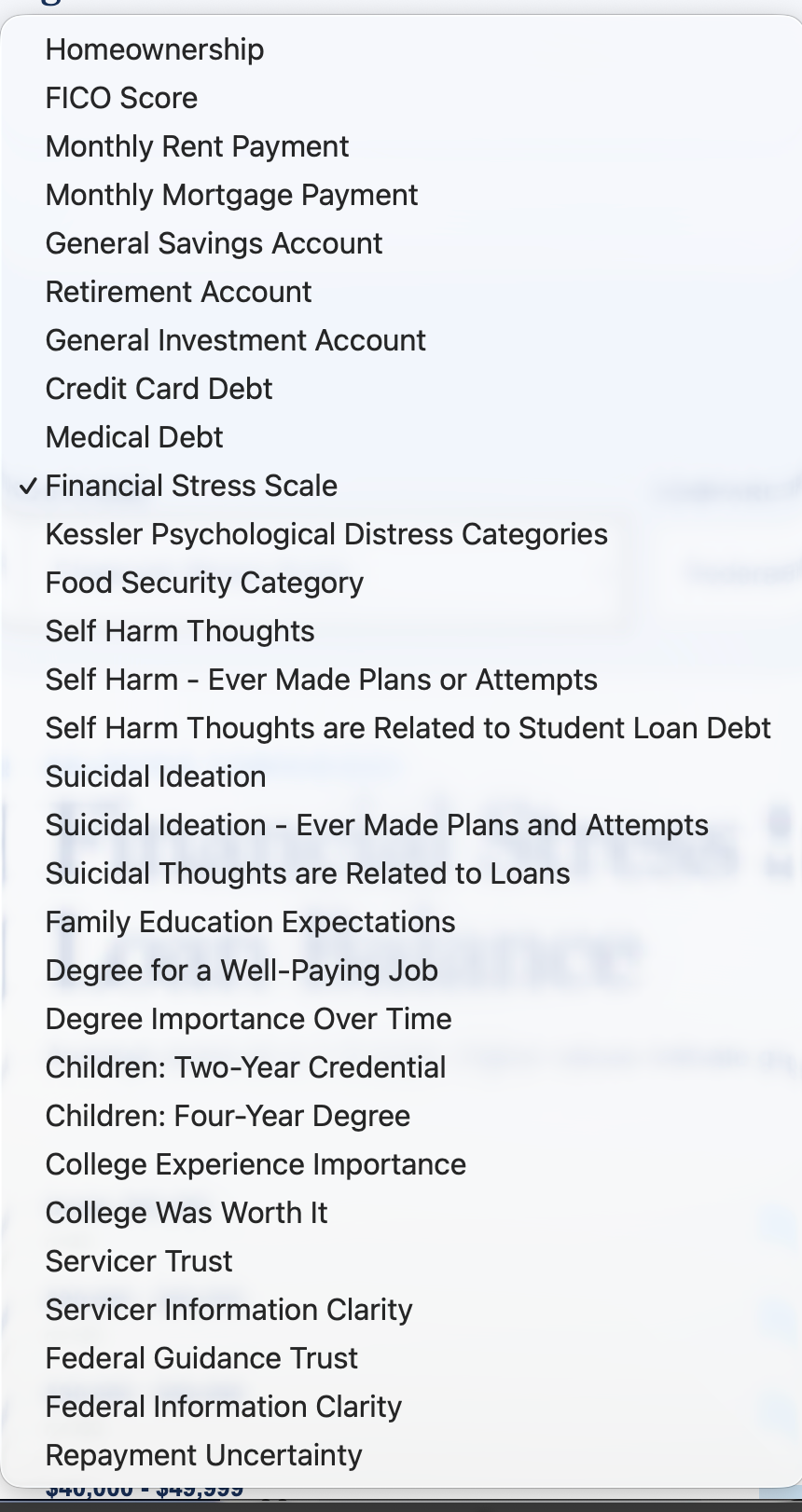
And the respondent characteristics:
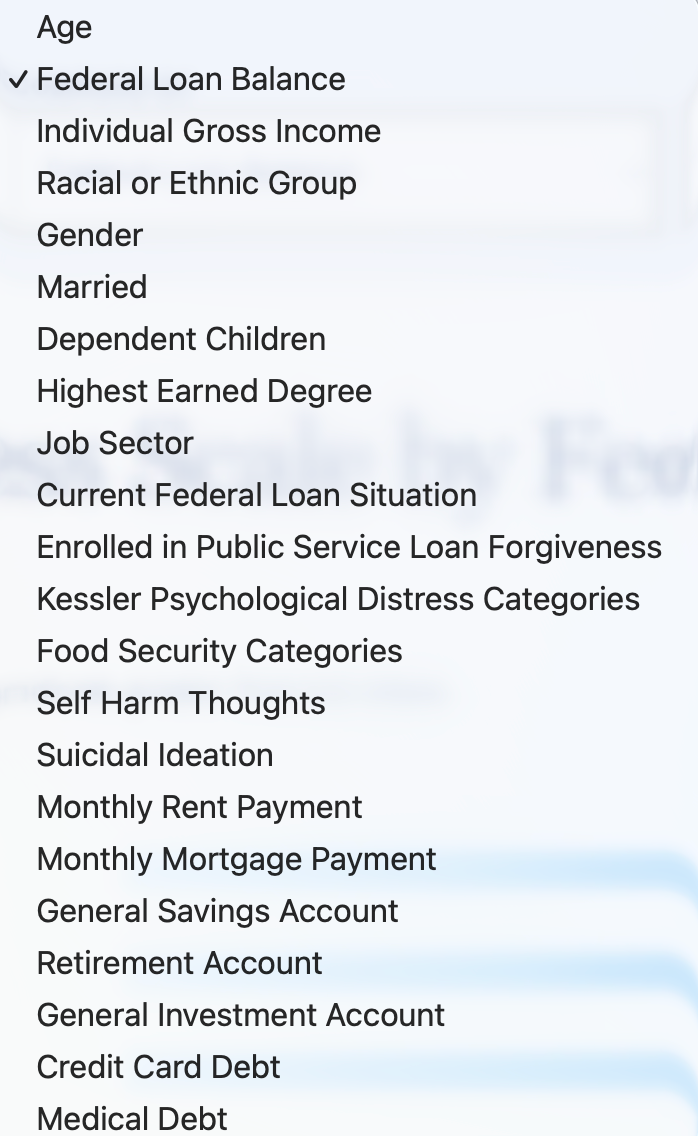
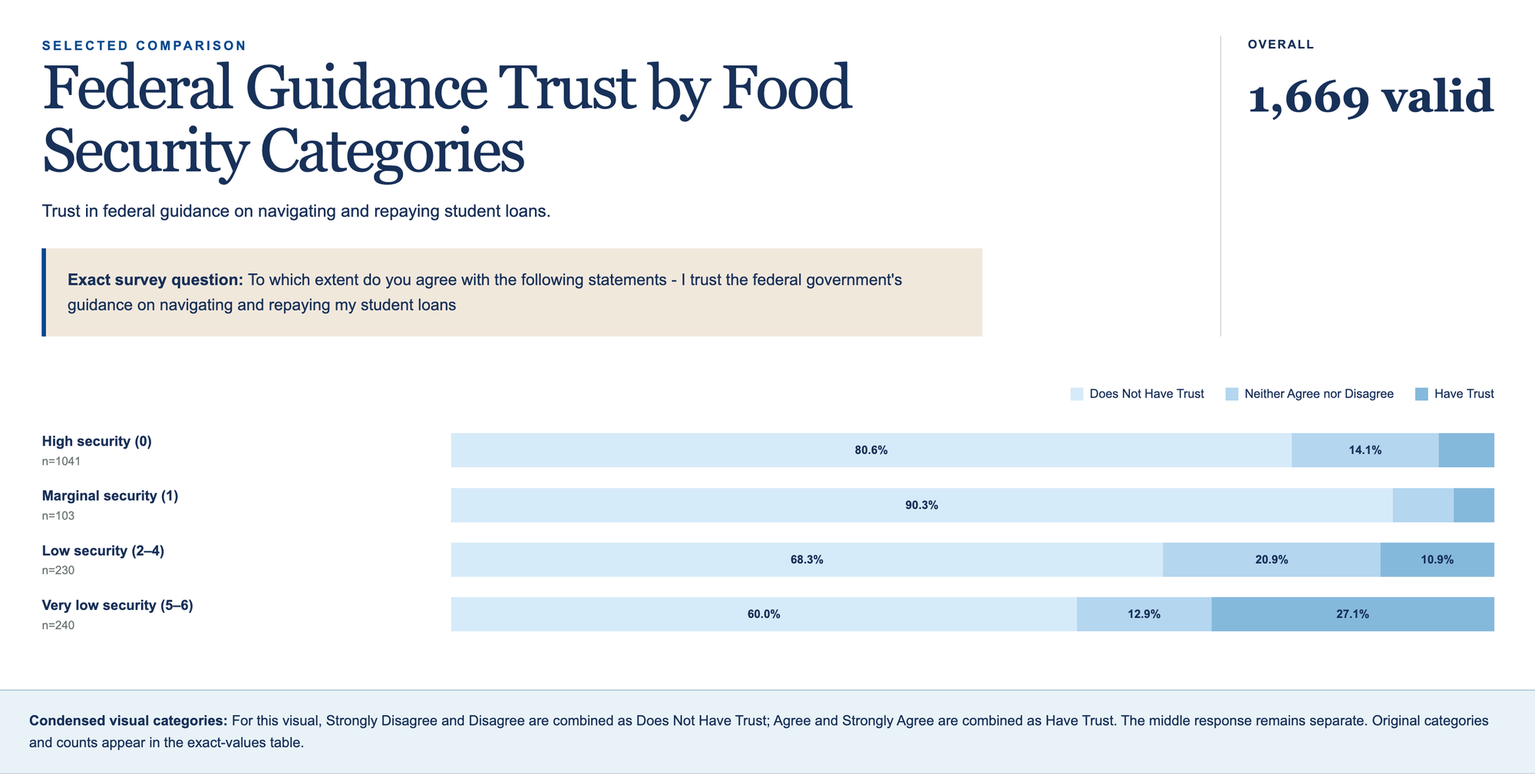
All of this is represented in clear, well-organized graphics (the URL suggests the help of chatgpt), with some web pages (with multiple downloads) designated specifically for the press and policy makers. For example, one example cut at the data:
The project is a model of the kinds of questions we should be asking about how student debt shapes of lives of those carrying the loans and for telling the stories of those in debt. Scholarly work presented in such an accessible, well-organized website moves research from behind academic journal paywalls and into the hands of students, journalists, activists, and policy makers.
What's Next?
All that said, Collier himself suggests caution in interpreting this data. There is nothing (that I could find) on the site about who completed the surveys or how they were recruited, nothing about the characteristics of the people being interviewed. He doesn't clarify what scholars, journalists or policy makers can infer from these responses about the 43 million people carrying student loan debt. Our capacity to better understand those millions is, of course, central to the broader value of this iteration of the project. Representation of the larger population of debtors doesn't require the loss of the personal in a project like this, but the project will have deeper value with clarity about whose voices are represented here (and whose voices we have yet to hear).
We don't know, for example, if the respondents to the surveys represent the distribution they very different sorts of people in student debt among those 43 million. The average debt for graduates with a bachelors degree is around $26,000. The basic information that we do have (n values on reported responses about debt levels seem to be skewed toward those with heavier loan balances; n values for "highest degree earned are much higher for graduate and professional degrees than for associates degrees) suggests that we're perhaps learning important things about some of the trees within the diversity of student debt holders but not yet the forest.
UPDATE (8/13): After I posted this on the Education and Class Bluesky account, Professor Collier replied that he's now updated the information on recruitment and sampling – there's a detailed explanation there now on the methods page, and readers now have a much clearer understanding of who is represented here.
The interactive data features are fascinating and informative – to a point. The general public, journalists, and policy makers are left on their own to evaluate the actual significance of different outcomes across respondent characteristics – no statistical analyses have been done. Collier does not claim otherwise in footnotes to his data tables:
Results are unweighted and descriptive. They do not establish causation or indicate that differences are statistically significant.
Journalists and other members of the public will have to be trusted not to make their own inferences about causality or generalizability from this (valuable) descriptive data.
As with all provocative scholarship, the broad range of data points also sparked my thinking about what else we might ask in work like this. The study explored an impressively broad range of personal characteristics and personal outcomes. I'm curious also about how student debt matters in one's public life.
Do financial stressors and subsequent work pressures mean that those deep in student debt are less able than others to contribute to political campaigns? To volunteer for candidates? To attend community events such as hearings on proposed data centers or political town halls? To volunteer in service of others in their communities or in their children's schools?
What can we learn about whether deep student debt restricts the public visibility, the public voice, or the civic contributions of debt holders? It would seem worth knowing about the public costs of high levels of student debt as well as the personal costs. No project can or should address everything, yet more projects can simultaneously explore the personal and the public fallout of crippling debt.
All that said, we will learn a great deal more about the lives of people who are carrying student loans as this project develops, and there is much here to spark deeper scholarly questions and deeper analysis from the field.


