

At the recommendation of people I deeply respect, I read Joan Willams’ 2025 book Outclassed: How the Left Lost the Working Class and How to Win Them Back . It's clearly an important question. 64% of white voters without a degree (but only 14% of Black voters without a degree) did vote for Trump in 2024). Significant numbers of lower-income people didn’t vote at all in the 2024 election.
Who Speaks On Behalf of Working Class Voters?
Who is Williams to explain these white voters without college degrees who supported Trump? She attended Yale as a legacy student (she mentions her grandfather's time there), did a masters at MIT and graduated from Harvard Law. Her wedding was featured in the “society” section of the New York Times. She now teaches law in the Bay Area.
She writes in the book that she speaks on behalf of the working class in part because her husband’s parents did not have college degrees and they struggled early in their marriage to understand each other because they were so different (Her husband also attended Harvard Law). She says little else about organizing with, teaching, or living among other working-class people.
White Working-Class Voters, Education, and the Election
I have a lot of questions about the book, but today I want to specifically think about her chapter on her claims about working-class voters' understanding of democrats’ and republicans’ policies on education and opportunity. Most of this discussion is in Chapter 11: “Smart People Get Ahead; Isn’t that Just Reality?”.
I want to be clear that I’m not speaking on behalf of “the working class” when I weigh the arguments in this chapter. I’m in no position to do that. I am drawing on my decades of work in the field of education. My critique will mainly focus on what Williams says about what working-class voters heard and interpreted about education from Democrats, and her interepretation of their negative reactions to those things. While she's writing about these voters turning to Trump, I will also question why she doesn't mention relevant things that Republicans (and Trump specifically) have said and done around education that have mattered in working-class lives.
I also want to be clear that I grappled for a while with how to talk about a chapter written by someone of much higher status than me, in a book blurbed by famous people. In the end, it seems fair that any author would expect the same critical read that any first-year, first-generation graduate student would get had they written this chapter as an education policy seminar paper.
The Basic Argument
Williams argues that Democrats (and especially Obama) communicated indifference and denigration of working-class people and working-class jobs in pursuit of “college for all”. Working-class voters then supported Trump, in part because Democrats’ policies on education were “humiliating” to working-class voters who felt “left out” by Democrats’ discourse about the importance of education, and especially college.
This chapter builds on her broader argument throughout the book that Democrats have been indifferent to the very real economic precarity of many working-class communities while Republicans promise dignity and jobs. She writes at length about the core values of "the working class" through which they evaluate candidates, and while I'll say less about those "values" arguments in this post, I will consider her understanding that these voters carefully scrutinize each candidate and even remember political discourse from past presidents as they vote today.
Democrats, she writes, "began arguing that everyone should and could get a college education". In a heavily referenced book, she cites no one saying this. Also without citation, she writes that 30 years of this "college-for-all ideal was humiliating to noncollege grads, implying that they lacked the intelligence, foresight, and/or discipline to do what it takes to succeed". Democrats, therefore, "let elites off the hook for robbing non-elites of their right to a middle-class future in the richest country in the world" as they instead claimed that a college education would usher then into that middle-class life.
I want to highlight just a few problems with Williams' claims about what working-class voters heard and believed about democrats, since she presents these arguments as their critique, not hers:
A Key Quote, Misattributed to Obama:
I immediately opened a search engine when I read this paragraph that builds her case that working-class voters felt demeaned by Obama’s discourse and his education policy:
In a shocking expression of liberals’ inclination to consign anyone who did not attend college to dead-end, low-paid jobs, Obama once said: “One of the reasons that inequality has probably gone up in our society is that people are being treated closer to the way that they’re supposed to be treated.”
I sought the search engine because it was my job to know about education policy and I'd never heard Obama saying anything close to this. And I was right.
No working-class voter ever reacted to Obama saying this, because Obama never said this.
Had Williams simply typed that quote into a search engine like I did, she’d see that it is attributed everywhere to the very problematic economist Larry Summers. The quote is from a book on the Obama presidency by elite journalist Ron Suskind. Summers served as an economic advisor for only two of Obama's eight years in office. Summers is also known for leaving the presidency of Harvard after a vote of no confidence from the faculty after sexist public comments about women in science and his conflicts with Black scholar Cornell West. Very recently, Summers resigned from his Harvard faculty job after revelations about his close friendship with Jeffery Epstein.
Yet Williams writes not only that Obama said this but that this quote is just one example of a patterns of broader "liberal" indifference to low-wage work and to the people who hold those jobs. She does not mention any other examples of liberals saying that low-wage workers get what's coming to them.
A Sketchy Timeline For a Shift From “Reverence” for Workers’ Skills to Today’s Worker “Humiliation” Under Democrats
Williams’ writes that current denigration of workers and disrespect for workers’ skills represent a significant shift from an earlier time when those skills were “highly valued”. Yet both endpoints of her timeline for this shift are curious.
Her support for the claim that workers were once “highly valued”? The Works Progress Administration Post Office murals of the 1930’s and 40’s that often depicted [male] workers in local industries. Yet these murals were commissioned to instill local pride in local resources and industries in the wake of massive unemployment and worker unrest during and after the depression. Their primary purpose was actually to provide artists with work.
Williams points to these idealized murals as evidence of a public consensus around the value of manual workers, but she writes nothing about the actual conditions of that work at the time. A local post office mural might depict proud miners emerging from the coal mine to return to their cozy homes, but hundreds of miners were killed in mining accidents every year when those murals first appeared. Other authors might read about the high rates of workplace deaths and conclude that miners – and other labor – were expendable, not “highly valued”. There were 19,600 occupational deaths across the U.S. in 1937 and 120,000 permanent injuries, yet WPA murals painted during those years represented exceptionally clean, brawny, proud workers and the pristine kitchen tables where supper awaited them.
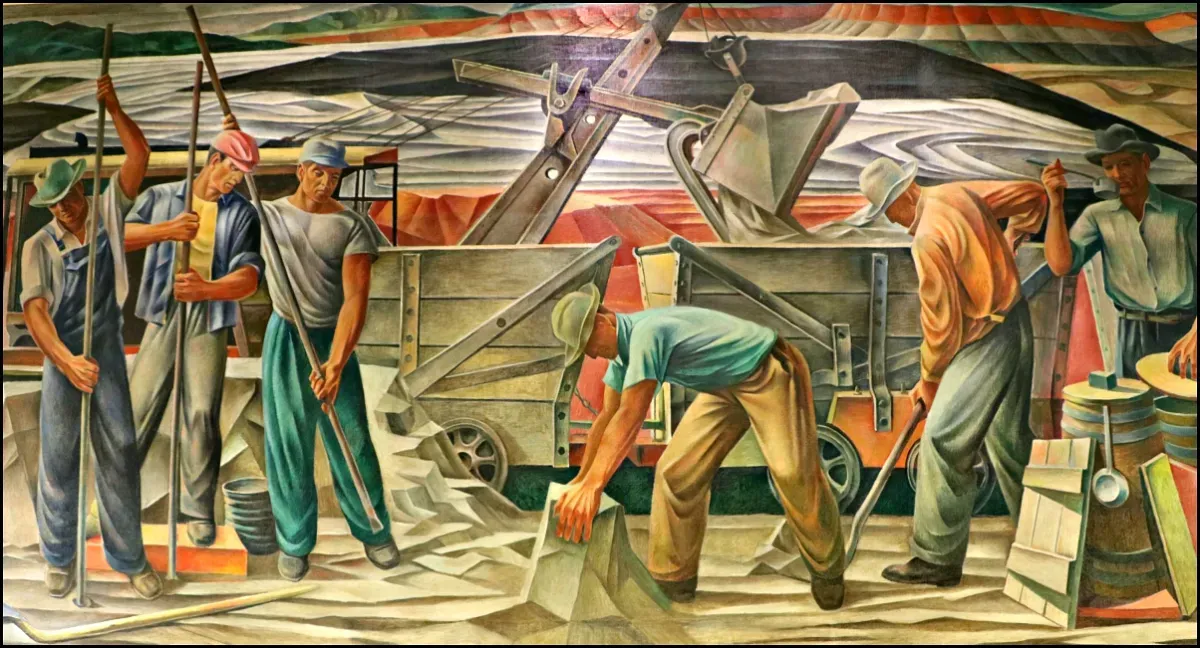
It’s very difficult to square Williams’ argument that workers’ skills were “highly valued” with the lengthy and brutal labor strikes across the country (with law enforcement often siding with owners, not workers) during that era.
But she presents the murals as her starting point for a timeline of a shift from public reverence for workers to their public denigration.
Her endpoint is even worse.
A Single Curious Citation for the “Decline” of Respect for the Non-College Educated
Williams cites a single journal article summarizing a set of social psychology surveys as her evidence that attitudes toward workers substantively declined under Democrats' rhetoric.
She introduces this article saying “by 2018", “college graduates tended to blame less educated people for their social disadvantage” and held them in lower esteem than any stigmatized racial group.
The words “by 2018” imply that she’s writing about research that documents a shift in attitudes. Yet the surveys written up in this single article did not measure change over time. It’s simply a paper published in 2018 based on recently collected data.
And who completed those surveys? Who are the “college graduates” in this damning study? The U.S. subjects completing the online surveys reported here were almost all employees of Amazon’s Mechanical Turks.
What was Mechanical Turks?
Long before any normalization of remote work during COVID, Mechanical Turks was an early gig-economy Amazon platform on which employers posted digital piece work for pay for people to complete at home on their personal computers. These jobs were low-pay projects such as marketing surveys, labeling photo collections, or research surveys when scholars didn’t have grants to recruit more representative research subjects.
Mechanical Turks workers often tried to maximize their pay by completing as many discrete jobs a day as possible. They might earn anywhere from a penny to a dime for completing one of the surveys reported in this article, requiring them to complete multiple surveys or other tasks a day to earn even minimum wage.
Yet Williams is claiming that Mechanical Turks workers doing low-wage work at home in 2018 – workers who opted in to these research surveys among all their choices – are representative of all college graduates, and that in a day of doing multiple surveys for a dime each, they carefully represented their deepest values when answering.
I can think of many reasons why people who had gone to college but were now at home clicking on dozens of marketing and research surveys a day might punch down when responding. It seems much harder to imagine that those workers fairly represent the broader population of college educated people.
The surveys asked nothing about how respondents came to these beliefs. It's Williams own claim that people "now" denigrated workers because of national political discourse.
In sum, Williams compares the artistic – and intentionally inspiring – depiction of workers in post office murals 80 years earlier with the 2018 survey responses of college-educated, at-home, low-wage gig workers. She believes that she’s documenting significant changes in attitude in this curious variation on comparing apples to oranges.
So what of that education discourse and policy that she claims working-class voters were hearing?
Misrepresenting Democrats’ Education Messaging as “College for All’”
Williams writes at length about democrats’ push for “college for all” that left working-class voters feeling “very left out” and that “erased the dignity of all kinds of jobs that are important”.
She doesn’t quote a single democrat advocating for “college for all”. She does draw inferences from other things happening during Obama's presidency.
She points, for example, to the shortage of workers in the construction trades in 2016 as evidence that the work in the trades was now disparaged. Yet economists have pointed to the massive layoffs of construction workers following the 2009 recession with many of those workers logically moving into different careers. They point to slowed immigration rates when there were fewer jobs, the reluctance of some young people to enter the trades after witnessing that dramatic boom and bust cycle of 2009, and routine retirements of a large generation of older workers as causing those shortages. There’s no evidence that potential electricians and plumbers instead enrolled in college.
She even writes later writes that college enrollment remained flat during this push for “college for all”. She writes mockingly that this is evidence that the “college for all” push “didn’t work”. She doesn’t consider that perhaps there never was such a push.
A Single Working-Class Voice, and He Was Working To Elect Democrats
Her only quote from any working-class person about democrats and college is a single short quote from a state leader of the Unite Here union. The quote is from a long New Yorker article (written by an Ivy League educated reporter) who interviewed multiple parties around the country about competing priorities for democratic voters in the upcoming 2022 mid-term election.
In its entirety, this labor leader is quoted saying that democrats do well with social security and medicare that are for everyone but “emphasized college too much”.
That’s it.
That’s all the reporter chose to include from what likely was a longer interview. Yet Williams’ presents this quote as evidence that democrats pushed college for everyone humiliated workers by inferring that non-college workers "lacked the intelligence, foresight, and/or discipline to do what it takes to succeed".
We are to infer this humiliation from the quote of the Unite Here union leader, yet Williams doesn't mention that Unite Here, invests heavily in fund-raising and volunteer canvassing to elect democrats in every election cycle. They endorsed, donated to and provided thousands of campaign volunteer hours to both of Obama's campaigns, as they did for HRC's, Biden's, and Harris's campaigns and those of state and local democrats.
It’s difficult to understand why she’d quote a union leader who was actively organizing union members to elect democrats as part of her argument for why working-class voters supported Trump.
Was It Working-Class Voters or Williams Who Didn't Hear Obama Speak of Job Training?
When she describes how Obama talked about education, she says nothing about how many times he proposed ambitious vocational training and upskilling programs as labor markets shifted to more skilled work.
Because I was working at a campus with close times to local community colleges during Obama’s presidency, I knew about how Republicans killed many of those programs: “First Jobs” training for young workers; free community college for workplace skills or college access; his annual “back to school” talks at high schools where he correctly talked about most higher-wage jobs requiring education beyond high school and specifically said that didn't always mean college; his Upskilling Initiative proposing federal funding for partnerships with local unions and industries to train local workers for emerging new fields and new technologies in existing fields.
Obama was correct that with the demise of unions and union-sponsored job training, most high school students would have to get additional training and education to find jobs with decent pay. He said in proposing each of these job focused initiatives that "education" was vital for success. When he erred, it was in implying that more training would create opportunity when job growth remained slow after the 2009 recession.
But Williams simply never writes anything about working-class voters' perceptions of any of Obama's worker initiatives (though he spoke of them in widely publicized settings as his State of the Union addresses). She writes nothing of what working-class voters thought about the GOP refusing to fund any of Obama's job training proposals.
She also doesn't mention the broader context within which Obama did talk about improving access to college.
The "Lost Decade" of College Funding
Williams speaks of the 2009 recession and the workplace, but she never mentions the devastating decade for state funding of public higher education during Obama's presidency. She never reports what working-class voters thought about the “lost decade” of cuts to state schools and colleges after the 2009 recession, especially in states under Republican leadership. Those cuts to college funding meant that colleges had to delay planned enrollment growth, cancel planned new degrees, and were less able to support access for first-generation students who wanted agriculture degrees to modernize the family farm or to be elementary teachers.
Anything that Obama said about college was against this backdrop of state legislatures allowing public colleges and universities to languish as those campuses were also forced to raise tuition to cover some of the cuts. And thanks to the very Republican President Reagan, students now had to take out loans because other federal financial aid had been cut:
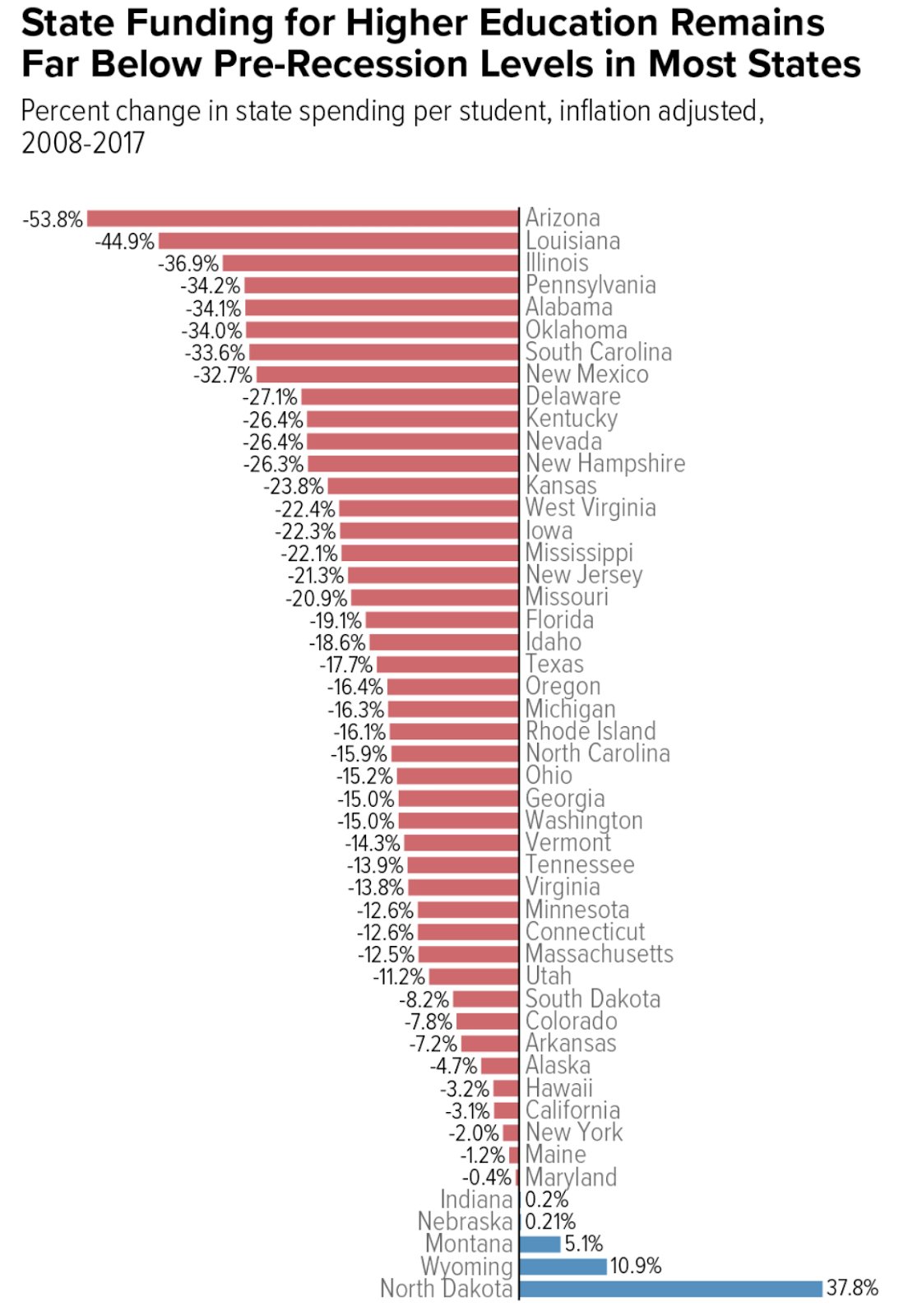
People working in public higher education – including working-class voters working as staff – were keenly aware of painful cuts to public colleges. It's Williams’ own argument that if Obama talked about college access, he intended to denigrate workers without college degrees. It seems not to occur to her that he was speaking to people who knew how deeply budgets had been cut for the public community college and state universities in their own backyards and how long-lasting those cuts were in many states. It seems not to occur to her that she was speaking to people who were facing lost dreams of college for their own children because of cuts at the state level.
Loud Silences: Republicans' Support for For-Profit Colleges That Exploited the Working-Class
It’s not Williams’ job to write an entire history of this era of education policy, but while she builds her case that Obama’s policies and discourse “humiliated” working-class voters (without quoting anyone claiming to have been humiliated), she never mentions the exploitation and subsequent real humiliation of working-class families in the GOP’s strong support for for-profit colleges and trade schools created by Wall Street Investors. These “colleges"aggressively recruited working-class students with promises of job training that would lead to good paying jobs. Instead, hundreds of thousands of people graduated from these places deeply in debt (assisted by staff who helped them submit loan applications) and unemployable.
Worse, as what the case of some of my students, these colleges folded while students were mid-program, leaving them in debt with nothing to show for their efforts. Those students knew they'd been duped, and were deeply humiliated.
Williams never mentions that Obama’s administration finally regulated these for-profit schools or that Obama’s DOJ (and Kamala Harris’s Attorney General office in California) ensured that tens of thousands of students who had attended these for-profit schools had their student loans discharged. People in many working-class communities knew neighbors and family who had their predatory loans erased. But Williams does not tell us what they thought about that relief from crushing debt provided by democrats.
Nor does she mention, in explaining Trump’s re-election in 2024, that after Obama's debt cancellation, Biden cancelled the debt of hundreds of thousands more for-profit college students who had been duped into going deeply in debt for worthless for-profit beauty and business and tech programs that opened everywhere with support from Republicans.
Williams does not mention that Trump himself started a fraudulent for-profit "university" that targeted single parents, the elderly, and other economically vulnerable people. She does not mention his legal maneuvering to avoid accountability for lying to these students or him finally settled $25 million in legal claims by former students only as he prepared to run for president.
Williams counts how many times Obama used the word "smart" to describe his policies and projects (even when he spoke of digital "smart" grids) as signaling a cult of “smartness” that excluded workers. She does not quote any working-class voters about why they might have been focused on his vocabulary but were relatively unbothered by Republicans' support of wealthy investors who profited when taking students' loan checks and veterans benefits at all those worthless for-profit colleges.
Centering Elite Colleges in the Working-Class Imagination
Claiming again that she’s documenting a shift in education over time, Williams writes that “college, once celebrated as the great leveler, has become a way to perpetuate class privilege”. She infers that working-class voters now recognize this shift and blame democrats.
Yet college was never a great leveler, and even more troubling, she writes only of Ivy League campuses in claiming that "colleges" once leveled playing field but now have ever-more competitive admissions, as if working-class voters are attuned to shifts in admissions at Harvard and Yale.
She’s flat-out wrong about the history of Ivy League admissions: we know that there has been almost no change in the socio-economic diversity of the Ivies in a century. Ivy League campuses have always been havens for wealthy students that perpetuate class privilege. Always. And the Ivies have never enrolled more than 1% of all undergraduates, so even had they ever recruited more low-income students, their impact on “leveling” would have been minimal.
She’s flat-out wrong again when she writes that admissions to the “top schools” has become much more competitive because so many [privileged] parents are desperate to pursue diminishing opportunities.
Education scholars have been writing for years about how the Ivies are now gaming their admissions data in competition with other elite schools for high rankings. Because college rankings heavily weigh admissions rates as a proxy for quality, these schools began making it easier to apply. They began investing in actively encouraging more applications from students that they know they’ll never admit - entirely to juice high “reject rates” for these annual college rankings. These schools actively exploit the big dreams of high school students from non-elite backgrounds to boost campus prestige to elite families.
Williams herself sees the higher rejection rates of these colleges and decides on her own that this is evidence that higher application numbers are driven instead by parents’ new fears of falling.
Worse, in centering admissions at a small number of east coast Ivy League campuses, she writes nothing about working- class families’ connections to their own state schools, though these families are at least often college sports fans and know people who have graduated from these schools. She says nothing about how working-class students who do go to college overwhelmingly enroll in nearby state universities and community colleges, nothing about how voters understand how underfunded many of these campuses are.
I find it curious that she infers that working-class voters blame Democrats for private Ivies mostly admitting the elite, while never mentioning the deep recent cuts to public colleges and universities, especially in red states.
Romanticizing Working-Class Lives
Near the end of the chapter, Williams writes that economic precarity has led ambitious privileged families to overschedule children in activities in the hopes of positioning them for success because of their "fear of falling". She quotes extensively from Annette Lareau’s 2011 book Unequal Childhoods in which Lareau contrasts the intensive “concerted cultivation” parenting of middle-class families and the “natural growth” parenting within poor and working -class families. Lareau contrasts highly scheduled childhoods in homes headed by parents with professional jobs with poor and working-class children playing with neighborhood friends after school with few structured sports practices or lessons.
Lareau does not write about the intense middle-class parents as "fearful" so much as she describes them as competitive and invested in perpetuating advantages for their own children by teaching them habits required in their own professional workplaces.
When I teach this book, students are often drawn to the independence and creativity that Lareau describes in working-class children as they spend hours of free play while more privileged peers are carpooled through a stressful schedule of piano lessons and elite sports practices.
Williams echoes that romanticization when she highlights a child named Tryec from Lareau’s book, a child who in play with neighborhood children developed, in Williams’ words, “skills in peer mediation, conflict management, personal responsibility, and strategizing”, life skills not learned by the upper-middle class children in the study like a child named Garrett.
It may be easy for an author who herself was a privileged parent to assume that child rearing styles were central to children's future success. Privileged people might assume that the skills of “peer mediation, conflict management, personal responsibility, and strategizing” learned by some working-class children would be valued in the workplace.
Yet Lareau focused on home life, not the broader material conditions of poor/working-class families and their privileged peers. She never implied that the skills that some children learned in free play would surmount unequal material conditions in which different families live.
Indeed, Williams seems not to have read the 2nd edition of Lareau’s book, in which Lareau returns to the families she wrote about 10 years before. Tryec’s and Garrett’s lives have taken very different paths.
Ten years later Garrett, who had little unstructured time as a child, went to a high school with multiple AP classes and good college counseling that prepared him to apply to multiple elite schools. Garrett’s father had gotten a new higher-paying job, allowing his mother to stay home to invest all of her time in her sons. Garrett’s participation in costly (and time-consuming) basketball travel leagues positioned him to star on his high school basketball team. With his AP classes and graduation from a highly regarded high school, Garrett got a “full-ride” sports scholarship to a prestigious private college, though he was disappointed not to be recruited by his top school.
Tyrec, in spite of the life-skills he learned in his less-structured childhood, was struggling ten years later. As his mother worried about his education, she transferred him among three different high schools: His under-resourced neighborhood school, a new charter school where his mother thought he might find more opportunities, and then a private school (with his parents going into debt to pay tuition) when the charter school didn’t live up to its promise.
The multiple transfers meant that Tyrec’s dreams of playing high school basketball were never possible. His close friendships were now a downfall: Tryrec followed several friends into juvenile detention, sentenced, he insisted, for things that the friends had done. Two of his friends had been killed.
Tryec had intended to go on to college, but across three high schools, no one seems to have taught him how to prepare to apply. He never took the courses needed for college admission and never took admissions tests. Quite apart from whatever he learned in creative play, the structural inequalities between Tyrec's schools and Garrett's ensured that Tyrec would enter young adulthood far behind Garrett.
Ten years after learning what Williams describes as valuable life skills through neighborhood play, Tryec had drifted through a series of minimum wage jobs in malls and fast food but was unemployed for months at a time when no jobs were available. He struggled during a year of remedial courses in community college. He then enrolled in a training program for a building trade and began work in that field at the highest wage he’d ever earned. A short time later, he was laid off from that job.
Child rearing styles mattered to Garrett, but only because they were backed by his family's money and the wealth in his community that funded his schools. Tyrec may have learned important life skills in childhood, but there was nowhere in his community in which those skills translated into educational or workplace capital.
Williams chose to write about Ivy League admissions in this book about working-class voters' perceptions of democrats, but she does not say anything about the deep inequities in public school funding that leave so many children in red states ill-prepared as citizens or as workers.
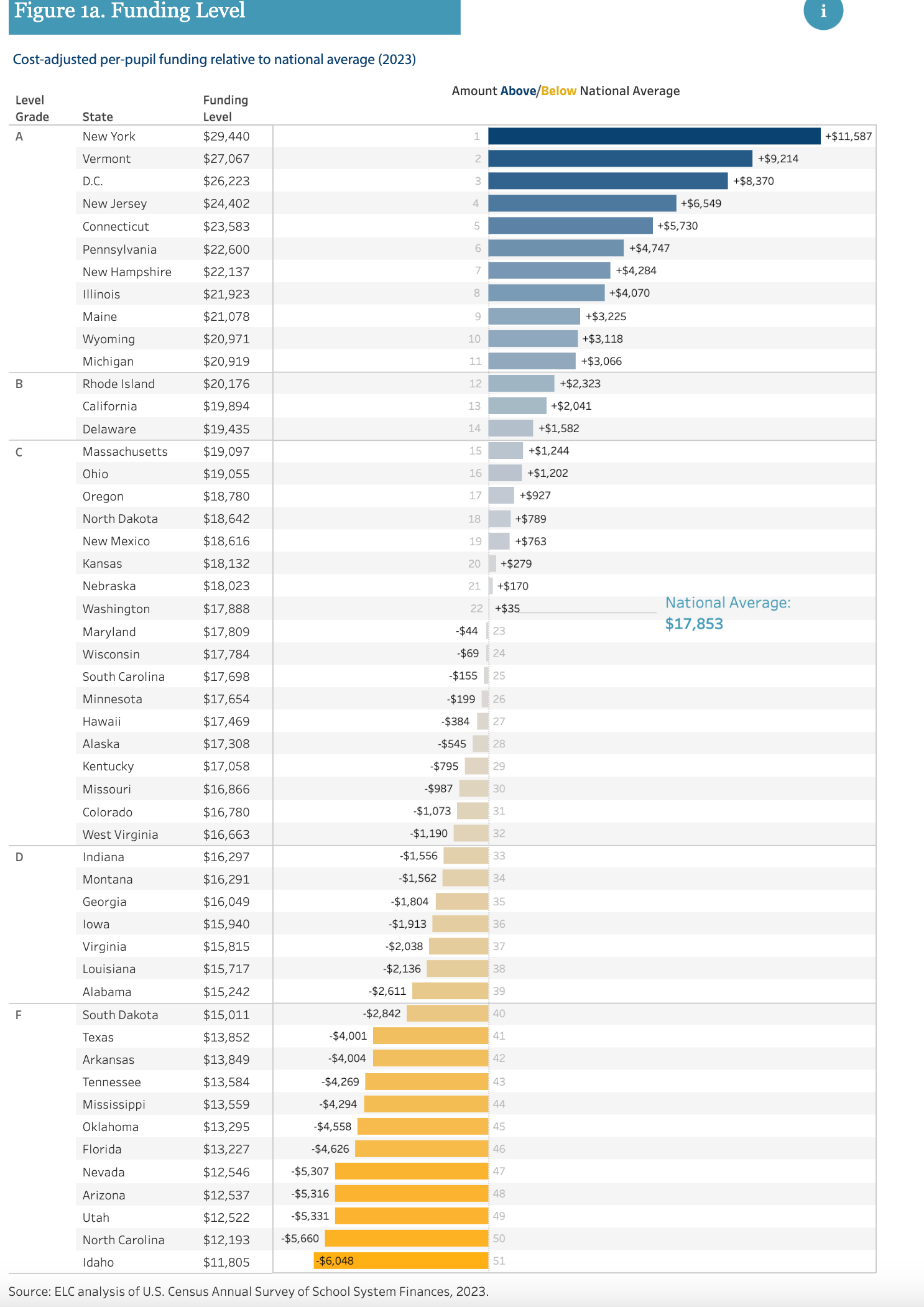
She does not speak to how under-resourced public schools in working-class communities in many red states may matter in how voters in these communities access and interpret information about the politics that shape their lives.
Working- Class Voters are Exotic, Yet Just Like Us
The very premise of the book, that working-class voters weigh how candidates align with distinctive class-based values, seems not to have a lot of support among political scientists. G. Elliot Morris calls this belief of an informed, coherent, values-driven electorate the “strategist fallacy in which elites map their own mental model of how they make political decisions onto all voters.
Instead, Morris argues “much political science finds that when it comes to their attitudes on the issues, voters are very fickle.”
Indeed, Morris argues, that rather than Trump's support coming from those attuned to party policy or political discourse, voters paying the least attention to politics voted overwhelmingly for Trump in 2024. When they did tune in, voters listened to polarized media and to people within their personal networks. They voted on “vibes” or "change", or attended to a handful of commercials aired near election day. Indeed, Morris documents, most voters hold contradictory beliefs about a range of political issues and may respond very differently to surveys of election priorities depending how a question is framed.
Williams doesn't offer a lot of evivdence for her core premises that working-class voters remember remember Obama's speeches, unfunded proposals, or actions. They may well resent of him for a range of reasons, only some of which have to do with policy.
As for why some turned to Trump? Trump supporters in my own family speak of their positive memories of his supposed business savvy after watching all 14 seasons of The Apprentice when they were young. They seem not know that he was fired from the franchise after his racist comments as he announced his presidency.
Yet Williams has written a book to explain the distinctive political lives of working-class voters that describes them as engaging in politics much like the professionals among whom she lives in a very blue part of the country.
This assumption may explain why it is so hard in so much of the book to know when Williams is conveying her own criticisms of democrats and when she's speaking knowledgeably about white working-class voters. Throughout the book, she seems to simply assume that they pay attention to what she attends to. Yet at the same time, their interpretations of those same political moves require book-length explanation.
Yet in the end, incumbents often lose midterms as voters come to better understand what they voted for, as "change" drives a lot of voters, and because voters are fickle.
Indeed, it appears that Trump himself has already lost the support of many of the lower-income white voters who put him into office. It's not that their core values have changed. It's that they now have to pay closer attention to him since his actions are affecting so many lives.
When Publishers Pay Ivy League Legacy Graduates to Explain Others
In the end, Williams’ book matters because every election now is high-stakes and every election will now be close and people who advise politicians blurbed the book. It matters because a publisher understood that a legacy Ivy League graduate with multiple elite advanced degrees could write a book-length account of the political lives of white voters without degrees, without claiming any sustained contact with the working-class beyond her in-laws.
It also matters because had a first-generation graduate student turned in an essay this weakly referenced in a first-year seminar, her academic career would likely be in jeopardy. She likely would not have been given the benefit of a doubt, let alone a book contract. No one would assume that she had important things to say if she couldn't verify quotes or if she stripped political discourse from historical context.
That first-gen student taking a run at graduate school would have to instead work really hard to ever get the mic to explain the circumstances of her own life to more powerful others, on her own terms. And, she'd have to think carefully about how to begin, given that those more powerful others are the ones now holding that mic and telling her story.


