

Back in June, I wrote about Orestes Hastings' [then] working paper on growing gaps in what high-income and low-income parents spend on their children. The paper is now published and is open-access.
Hastings was recently interviewed about the article by his campus news office, and he highlights how growing income and wealth inequalities are perpetuated:
Adjusted for inflation, families in the top 10% of earners now spend more than 13 times as much per child as families in the bottom 25%, compared to just three times as much in the early 1980s.
In dollar terms, since 1980:
For the top 10%, per-child investment quadrupled from about $1,900/year to $7,655/year. The bottom 25% are, if anything, slightly worse. Their average per-child spending was $575 in 2024, compared with $616 in 1980-81 (inflation-adjusted 2024 dollars).
As in my post on the working paper back in June, I'd wish for all college students to be engaged in frank and open conversations about these inequalities early in their first term. I'd wish that from there, they'd learn in courses about how beyond personal spending, privileged families also work the public school system (or pay private school tuition) to solidify their children's advantages.
I'd wish for ongoing deliberations across campus about individual "merit" in light of these childhood inequalities, about public policies that deepen economic inequalities and those that close opportunity gaps, about wealth that translates into power and about how historically, people have challenged each.
In the interview, Hastings describes privileged parents as imagining society as a ladder with the gaps between rungs growing wider. Thus, he says, they're compelled to place their children as high up that ladder as possible, and they have the means to do so.
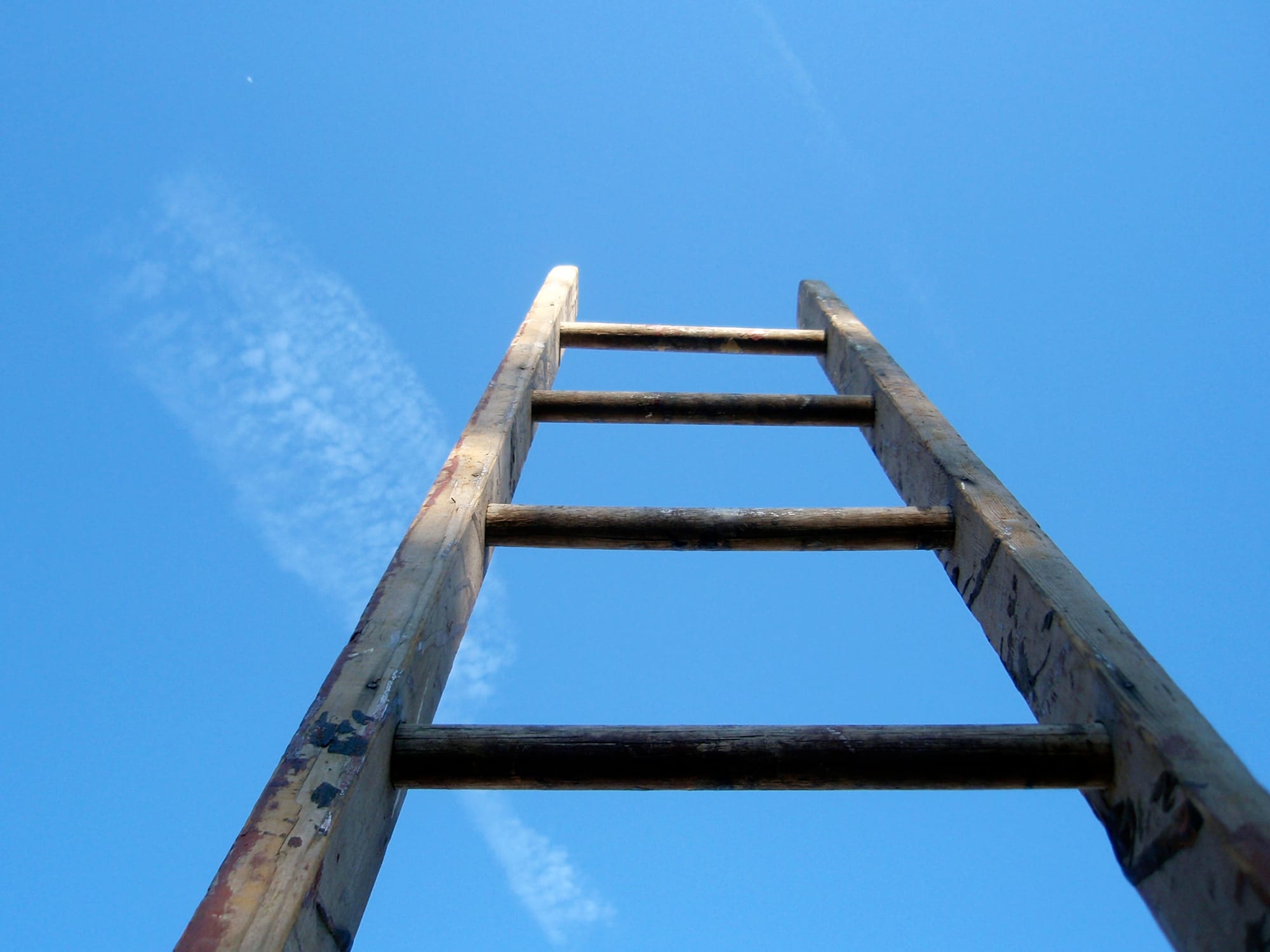
It has never been enough to advise first-generation college students that their own personal resilience will get them up that ladder. It's good to strengthen them for the climb, but it would seem to be shortchanging them to not also prepare them for the people in power who build ever more narrow and precarious ladders when they could be building broad ramps and staircases with room for so many more.


